Easy Dango Recipe
5.0
(7)
Your folders
Your folders
Prep Time: 35 minutes
Cook Time: 10 minutes
Total: 45 minutes
Servings: 12
Author : Dina
Ingredients
Export 3 ingredients for grocery delivery
Instructions
Step 1
Before you get started on the dango, you’ll need to soak 12 small bamboo skewers in water.
Step 2
Add 150 grams of non-glutinous rice flour (joshinko) into a bowl, along with 200 grams glutinous sweet rice flour (shiratamako). You can also add 75 grams of powdered sugar to make the dango sweeter if you want.
Step 3
Then pour in 1 1/3 cup hot water. Begin mixing using a spoon. Once the mixture begins to take shape, use your hands to mold the dango dough together. Depending on how you measured your ingredients can determine the texture of the dough. So you may need to add a little more flour or a little more water to get the correct consistency. The dough should feel similar to clay or play-dough, but a little softer.
Step 4
Now, evenly divide the dough into three separate pieces. Place the dough pieces into 3 separate bowls. Add 1 drop of pink food coloring into one piece and work it in.
Step 5
The second piece of dough will be the matcha one. So you’ll need to add 1 teaspoon of water to 1 teaspoon of match powder to make a paste. Then add the Matcha paste to that dough and work it in as well.
Step 6
The third piece of dough will remain white, so you do not need to add anything to it.
Step 7
Now shape the dough into round balls. Each ball should be 20 grams. It’s best to use a kitchen scale when measuring out the weight of the dough. This recipe should make about 36 balls.
Step 8
Now bring a pot of water to a boil and begin cooking the white dango balls first. Once you see the balls rise to the top of the pot, continue cooking for another 2 minutes.
Step 9
Then use a slotted spoon to transfer the steamed dango and quickly place it into a bowl of ice water.
Step 10
Continue doing this for the pink dango and then the green dango last. You want to cook in this order to avoid staining the water and changing the color of the dango.
Step 11
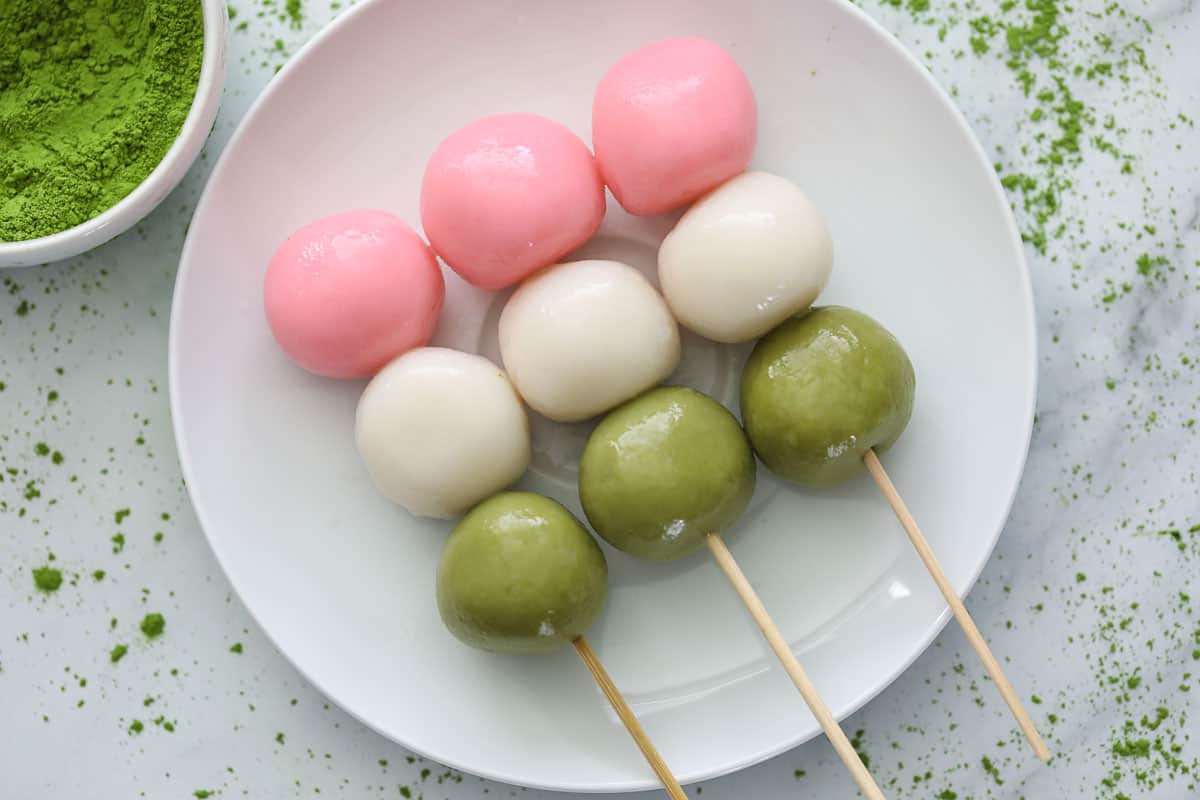
Now you can skewer the dango onto the bamboo skewers. Always insert the green ones first, then the white ones in the middle, and the pink ones last. The pink symbolizes spring cherry blossoms, white represents winter snow, and green represents summer grass. They are typically eaten during spring cherry blossom season. You can eat them as they are or add toppings like sweet soy glaze, red bean paste, or matcha paste.